Stronger Together: WCC and Wounded Warrior Project Partner to Power Connection and Healing
 When organizations share a deep commitment to serving Veterans, collaboration becomes more than a partnership — it becomes a powerful way to expand impact and reach more lives together.
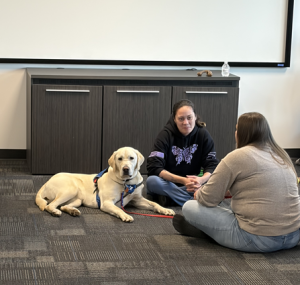
That spirit has been on full display as Warrior Canine Connection (WCC) and Wounded Warrior Project (WWP) teamed up to host two Mission Based Trauma Recovery (MBTR) sessions in the Pittsburgh area. Together, the events offered area Veterans an introduction to WCC’s innovative Mission Based Trauma Recovery (MBTR) program and reinforced what’s possible when like-minded organizations work side by side.
While MBTR is traditionally delivered as an eight-week program, these sessions were designed as one-day, hands-on experiences for Veterans connected through WWP to engage with service dogs in training and with one another. During MBTR, Veterans learn how to train service dogs for their fellow Warriors. In the process, they also build skills such as communication, confidence, accountability, emotional regulation and patience — promoting an act of service while experiencing therapeutic benefits themselves.
“Sessions like this open people’s eyes to just how powerful dogs can be,” said Sue Watson, WCC Pittsburgh program manager and service dog training instructor. “The impact is incredible — and even if it’s just for an afternoon, you can feel the camaraderie, the connection and the lift it gives everyone in the room.”
Each gathering welcomed a small group, creating space for meaningful conversation and connection. The sessions began with food and introductions before five service dogs in training — WCC’s Poyner, Jimmy, Lego, Ski and Ash — took center stage alongside their Puppy Raisers, who shared the significance behind the dogs’ namesakes and their roles in their journeys.
Participants were guided through a mini MBTR experience, learning core principles such as the stages of canine learning, the “yes” marker, bonding, check-ins and introductory training commands. Veterans observed stress cueing and interacted directly with the dogs, applying what they learned in real time.
“For me, the hypervigilance is always there … that feeling that you have to keep looking over your shoulder,” said Tim Nicotra, Air Force Veteran. “But when I’m out with a WCC dog, I know he has my back. Instead of scanning everything around me, I can focus on him and just be in the moment. Even after finishing the eight-week MBTR program, I keep coming back because working with the dogs is so positive. I also want people to understand how much these dogs can help — and how much unconditional love they give.”
All participating Veterans were connected through WWP, underscoring the organization’s commitment to ensuring Veterans have access to a wide range of programs and partners that support their wellbeing.
“We believe the strongest outcomes for Veterans happen when organizations stop operating in silos and start amplifying each other’s strengths,” said Ashley Bunce, WWP’s director of community partnerships and investments. “WCC’s Mission Based Trauma Recovery model is exactly the kind of purposeful, proven programming we’ve been proud to stand behind since 2020. Bringing WWP-connected Veterans into these sessions means more warriors have access to healing pathways they may never have found otherwise. That’s the power of a true ecosystem of care.”
WWP’s support of WCC reflects its broader investment in strengthening the ecosystem of nonprofits dedicated to serving Veterans and their families. By collaborating on MBTR sessions, and exploring recurring opportunities, WWP is helping expand access to mission-driven approaches to alternative therapy, connection and recovery. Warriors are benefiting from the physiological and psychological animal-human connection.
For many Veterans, the experience goes far beyond learning dog training techniques. Working side by side toward a shared goal fosters trust and teamwork, creating a renewed sense of connection and purpose. Just as meaningful is the opportunity to spend time with fellow Veterans in an environment that feels welcoming, supportive, and grounded in something positive.
Together, these sessions demonstrate how collaboration can amplify impact — creating new interventions for engagement, healing and connection. Learn more about how you can get involved with either of these organizations by visiting: www.woundedwarriorproject.org and www.warriorcanineconnection.org.
###
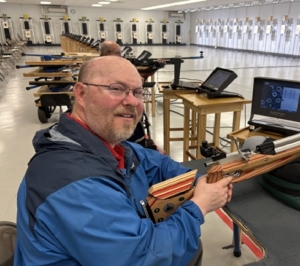 After more than two decades of service in the U.S. Army, Lieutenant Colonel (Ret.) Todd DeLong knows what it means to live with both pride and sacrifice. Todd’s 22-year career began in the infantry before he transitioned into military intelligence and eventually network security. His final role, serving as Battalion Commander in the First Information Operations Command at Fort Belvoir, was one of leadership, responsibility and commitment.
 For retired Marine Corps Master Gunnery Sergeant Creighton Scott, the transition from military service to civilian life came with challenges, but also with an unexpected source of strength and purpose. Enter Warrior Canine Connection (WCC), where Creighton not only worked to help train dogs for his fellow Veterans, but also met Papa, his own service dog and loyal partner.
  Angela Bonanno is the kind of person who makes you wonder if there’s anything she doesn’t do.
  When Army Veteran Jonathon Kohl woke up in a hospital bed in 2013, doctors told his parents he would likely never walk again. He had survived a helicopter crash while serving in Afghanistan—just four months into his deployment and three years into his military career. The traumatic brain injury he sustained, along with other physical wounds, erased his memories and changed the course of his life forever.
 For many Veterans, adjusting to life after service comes with unique challenges. Through a partnership between Warrior Canine Connection (WCC) and Wounded Warrior Project (WWP), Veterans are finding healing, connection and camaraderie in an unexpected way—through adorable puppies.
 For Veterans navigating life after military service, programs like Wounded Warrior Project’s (WWP) Project Odyssey provide critical tools for healing and resilience. Through outdoor activities and group-based skill-building, Project Odyssey helps Veterans build resiliency by reconnecting with themselves and others.
 Anna Cherepnina stood at Everest Base Camp, taking in the breathtaking view and reflecting on her journey; She had gone from the depths of despair to scaling new heights of hope—both figuratively and literally. Just a year earlier, Anna was overwhelmed by darkness, struggling to find any reason to keep going. With time and patience, she rebuilt her life and now helps others do the same as an outreach specialist with Wounded Warrior Project (WWP).
 We are privileged to introduce you to U.S. Navy IT3 Keisha Peterson-Anderson, whom we met through Warrior Canine Connection’s (WCC) Mission Based Trauma Recovery (MBTR) training program in partnership with Wounded Warrior Project (WWP). We are honored to share her Warrior story.
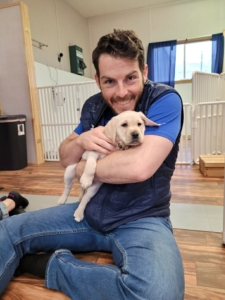 Today we introduce you to U.S. Air Force Captain (ret.) Andrew Miller. He’s a Veteran who Warrior Canine Connection (WCC) had the pleasure of meeting through its Mission Based Trauma Recovery (MBTR) training program in partnership with Wounded Warrior Project (WWP). We are honored to share his story.