Healing Together: Wounded Warrior Project’s Project Odyssey and the Power of Dogs
 For Veterans navigating life after military service, programs like Wounded Warrior Project’s (WWP) Project Odyssey provide critical tools for healing and resilience. Through outdoor activities and group-based skill-building, Project Odyssey helps Veterans build resiliency by reconnecting with themselves and others.
Project Odyssey is a 12-week program that helps strengthen coping and communication skills through group activities, outdoor experiences and a 5-day in-person workshop. Over the past three years, Warrior Canine Connection’s (WCC) Asheville team has supported several sessions, bringing their service dogs in training to interact with Veterans as part of WCC’s Mission-Based Trauma Recovery (MBTR) program.
“Project Odyssey really aligns well with our Mission-Based Trauma Recovery curriculum,” says Amy Guidash, WCC’s program director. “We absolutely love working with Wounded Warrior Project—they’re fabulous partners. It’s another opportunity to bring the healing power of working with service dogs to a whole different group of Veterans. We’re able to show how the skills they’re learning in Project Odyssey—like clear communication, impulse control, and relationship building—connect directly to their work with the dogs.”
During in-person workshop, the goal is to challenge Warriors to get out of their comfort zones, learn new skills on how to approach different experiences and help with connecting the experience to improve their own coping skills and build resiliency to when challenging their own lives. Then, after they’ve left, the idea is to use the things they’ve learned during the program to adapt, cope and build a better life. For many participants, joining the program alone takes courage.
“It’s amazing to see Warriors come together for a week,” says Alex Jankowski, Project Odyssey Specialist, WWP. “Even just getting on a plane to attend can be a huge step. Watching them move out of their comfort zones, form connections and build camaraderie is incredible. That’s part of the magic—seeing their growth and the support networks they create.”
The program intentionally keeps the in-person activities under wraps until the last moment to challenge participants to stay present and adaptable, teaching them to apply those lessons to real-life scenarios.
WCC’s service dogs bring an added depth to these experiences, helping Veterans practice patience, communication and trust.
“It’s amazing how quickly Veterans connect with the dogs,” Guidash says. “There are so many lightbulb moments where they realize, ‘If I can communicate this effectively with a dog, I can do it in other areas of my life, too.’”
Guidash recalls one session where two female Veterans initially stayed on the sidelines due to their reservations about dogs.
“By the end, they were fully engaged—interacting with the dogs, laughing and even taking selfies with them,” she says. “It was incredible to witness that shift. In such a short time, the dogs helped build a positive connection, fostering trust and emotional breakthroughs.”
WWP values WCC’s contributions to Project Odyssey, seeing it as a meaningful addition.
“When we partnered with WCC, the excitement among participants was palpable,” Jankowski says. “Many of them have personal connections to dogs, so being part of the training process hit home. It added a new layer of connection to the experience.”
For WCC, the collaboration is equally impactful.
“We’re so grateful to be a small part of the work WWP is doing with Project Odyssey,” Guidash says. “The program is making such a meaningful impact on Veterans’ lives, and we’re honored to support that.”
For Veterans who attend Project Odyssey each year, time spent with WCC’s service dogs is more than just heartwarming—it’s transformative. These interactions teach valuable life skills and offer Veterans a new way to connect—with themselves, with others, and with the world around them.
Healing can take many forms—a peer’s encouragement, a mentor’s guidance or the wag of a dog’s tail. For these Veterans, every small step forward is a testament to their resilience and the life-changing power of programs like Project Odyssey. To learn more about WWP’s Project Odyssey program, visit https://www.woundedwarriorproject.org/programs/project-odyssey.
###
 Anna Cherepnina stood at Everest Base Camp, taking in the breathtaking view and reflecting on her journey; She had gone from the depths of despair to scaling new heights of hope—both figuratively and literally. Just a year earlier, Anna was overwhelmed by darkness, struggling to find any reason to keep going. With time and patience, she rebuilt her life and now helps others do the same as an outreach specialist with Wounded Warrior Project (WWP).
 We are privileged to introduce you to U.S. Navy IT3 Keisha Peterson-Anderson, whom we met through Warrior Canine Connection’s (WCC) Mission Based Trauma Recovery (MBTR) training program in partnership with Wounded Warrior Project (WWP). We are honored to share her Warrior story.
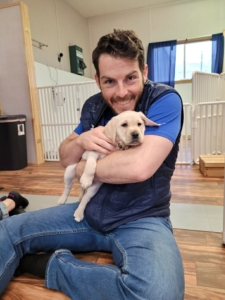 Today we introduce you to U.S. Air Force Captain (ret.) Andrew Miller. He’s a Veteran who Warrior Canine Connection (WCC) had the pleasure of meeting through its Mission Based Trauma Recovery (MBTR) training program in partnership with Wounded Warrior Project (WWP). We are honored to share his story.
 Three years ago, as she was being rushed into emergency surgery at Walter Reed National Military Medical Center during the COVID pandemic, doctors told U.S. Air Force Major (ret.) Molly O’Connell and her husband that there was a chance she may not walk again — it would depend on the severity of the damage to her spinal cord.
 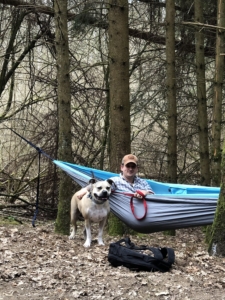 U.S. Army First Sergeant Alex Brownstein says serving in the military has been the most meaningful thing he’s done in his life. We met him through Warrior Canine Connection’s Mission Based Trauma Recovery (MBTR) training program in partnership with Wounded Warrior Project (WWP). We are honored to share his Warrior story.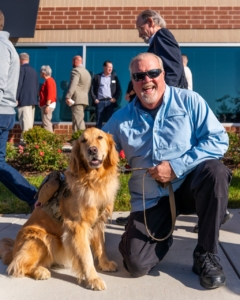
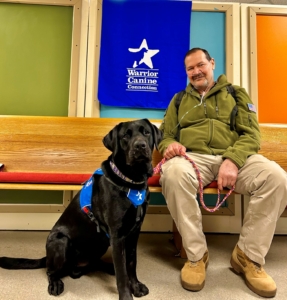 It’s not uncommon for Johnny Martinez
 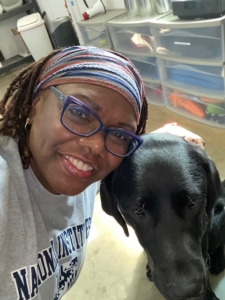 Today we introduce you to U.S. Air Force Major (ret.) April Ames-Chase. She’s a Veteran who Warrior Canine Connection (WCC) had the good fortune to meet through its Mission Based Trauma Recovery (MBTR) training program in partnership with Wounded Warrior Project (WWP). We are privileged to share her story.
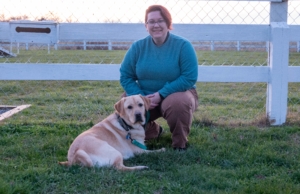 Air Force Veteran Amber Adams has always loved animals. Growing up, her family raised beagles, and now she has two cats of her own. So, when she saw an opportunity through Wounded Warrior Project (WWP) to be involved with Warrior Canine Connection (WCC) and help train future service dogs, she signed up.